
MFA in Screen Scoring & Music Design
15 MONTHS – 5 QUARTERS
82 CREDITS
$585 – COST PER CREDIT
INAUGURAL COHORT STARTS OCT. 5

What an MFA means for your next chapter
Our MFA in Screen Scoring & Music Design is designed to prepare students to pursue a career in the field of music for on-screen media, including film, television, video games and interactive entertainment.
Learn from World-Class Industry Professionals
Instructors and guest professionals bring real-world workflows, techniques and perspectives directly into the program—helping you develop your craft while building work that’s ready to represent you professionally.
Working Practitioners
Mentorship Model
Portfolio-Focused Learning
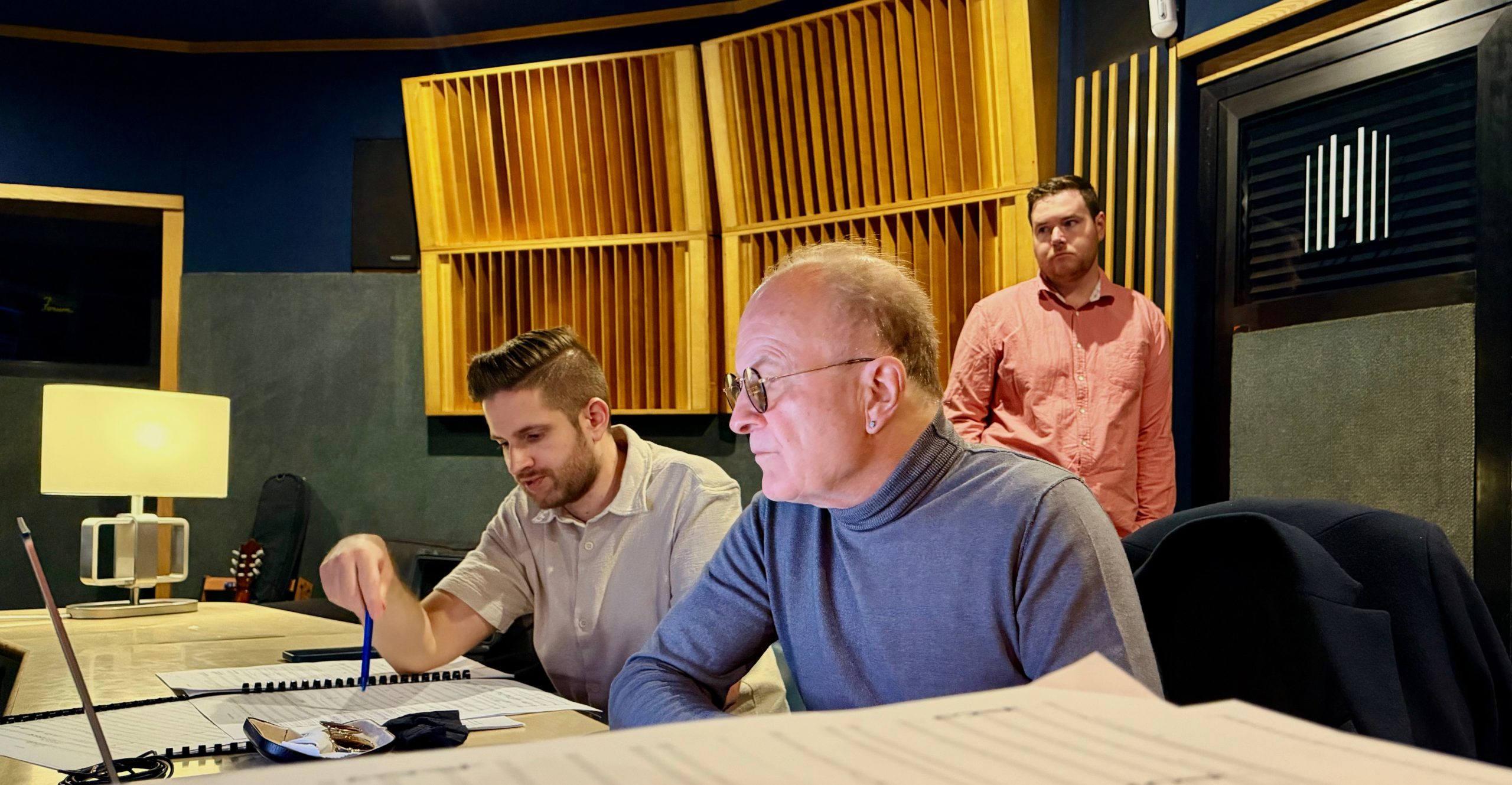
Andy Hill
Executive Dean, Creative Arts
Andy Hill is a thirty-five year veteran of the film and television music industry.
Read More
Phillip Simmons
Associate Professor, Orchestration/Arranging
Phillip Arthur Simmons is a composer, orchestrator, and educator from Atlanta, Georgia.
Read More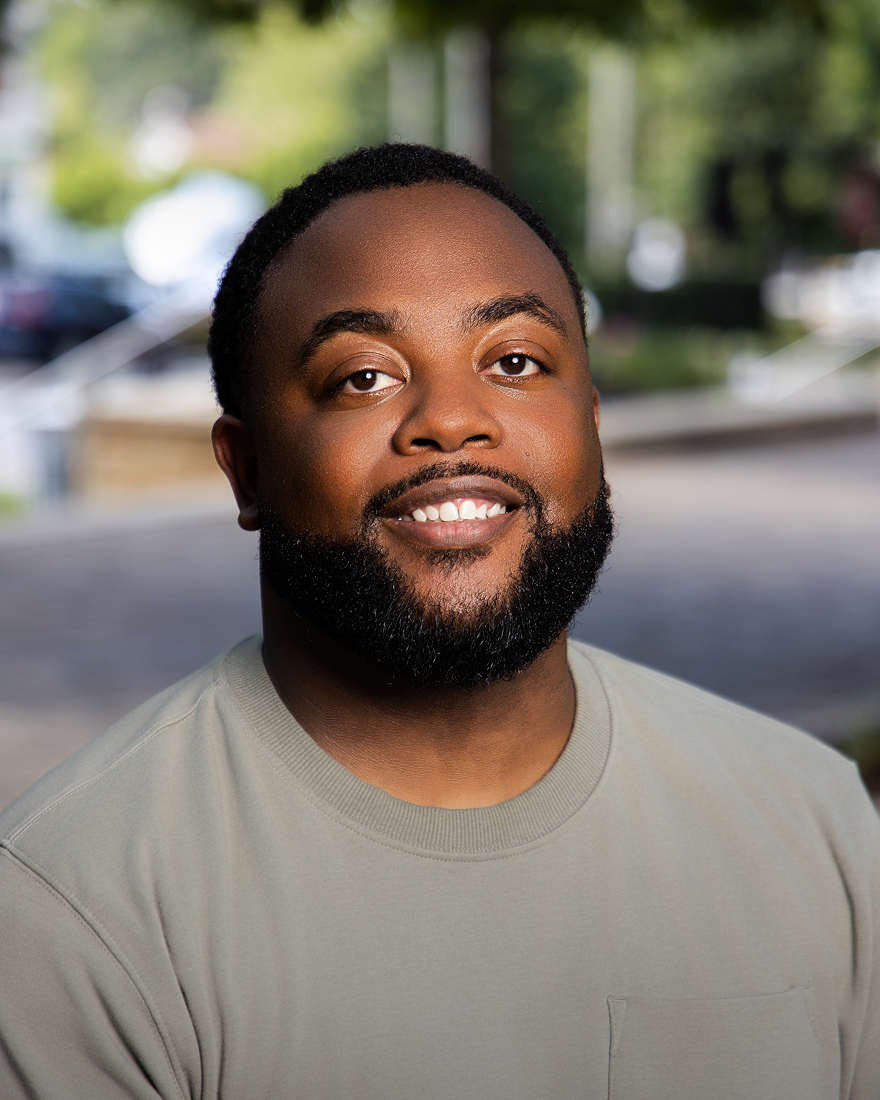
Demetrius Martin
Faculty and Technical Resource Specialist
Demetrius A. Martin is an Atlanta-based producer, audio engineer, and entrepreneur.
Read MoreGuest Lecturers and Advisors
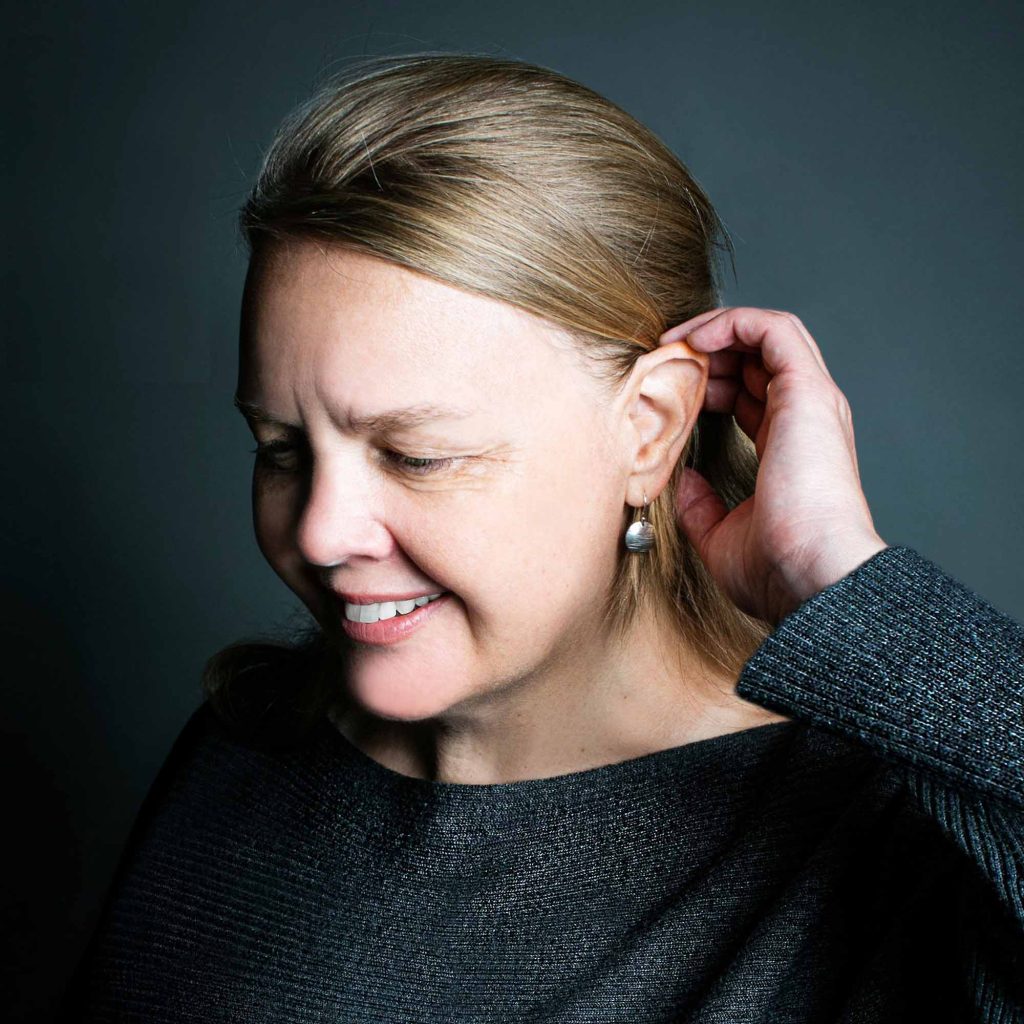
Catherine Joy
Joy Music House
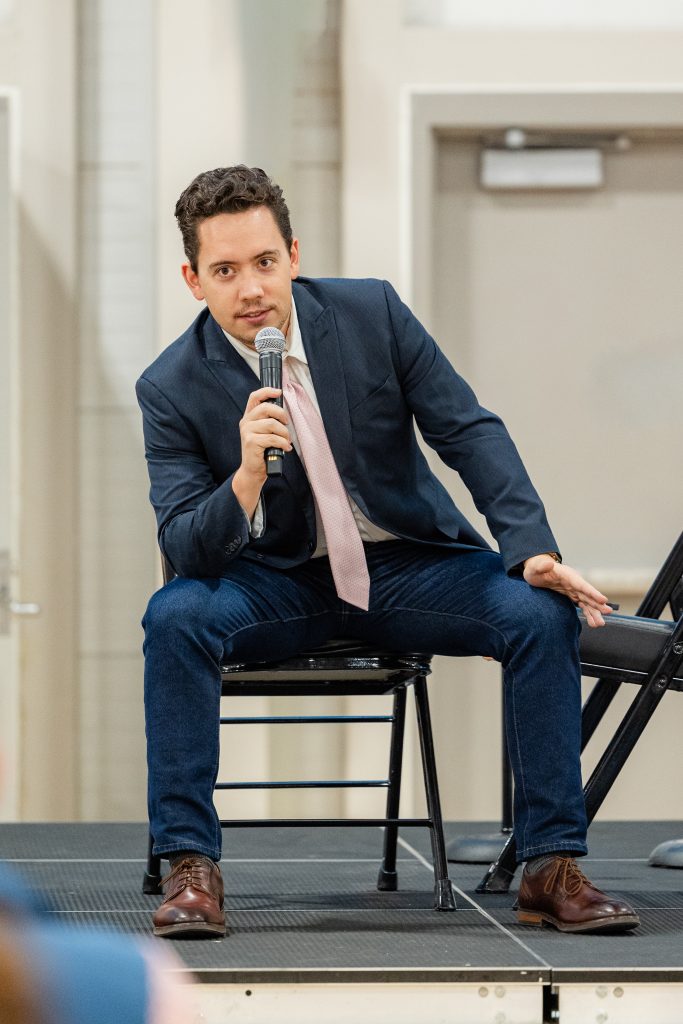
Seth Wright
Wright Music Interactive
Edy Lan
Music Nerds LLC
Jay Weigel
Build A Pitch-Ready Portfolio
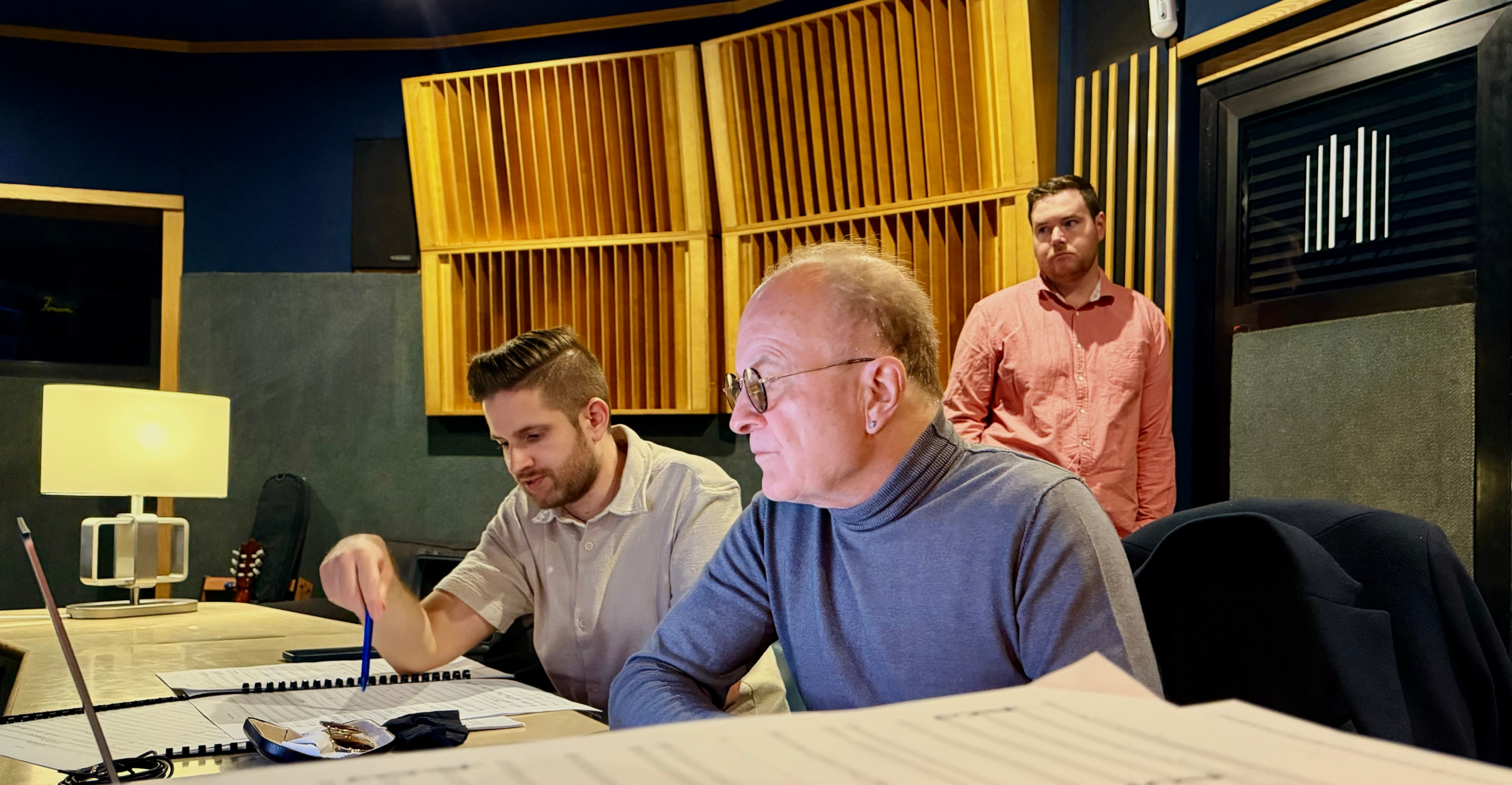
Develop work you can actually show while gaining hands-on experience with recording sessions, live ensembles, professional production processes, and the realities of life as a screen composer.
Industry-Driven Instruction
Learn from credited professionals actively working across film, television and games.
Real Creative Process
Develop music through collaboration and professional critique.
Find Your Voice
Directed study and mentorship sessions help students refine their artistic identity and creative process.
Atlanta Creative Ecosystem
Located in Midtown Atlanta, MDS places students within one of the fastest-growing creative and production hubs in the U.S.
Studio Environment
Work in an acoustically isolated composer lab with personal workstations, dual-display monitors, 61-key controllers, and high-speed LAN connectivity — plus 5.1 surround monitoring and private mixing rooms. Use industry-standard tools like EastWest ComposerCloud+, Musio+ Complete, Kontakt 8, Dorico 6, Pro Tools Studio.
Set Up to Succeed
Graduate with portfolio-quality work built in professional production environments, plus ongoing access to a continually updated database of screen music employment opportunities.
Your Score.
A Real Orchestra.
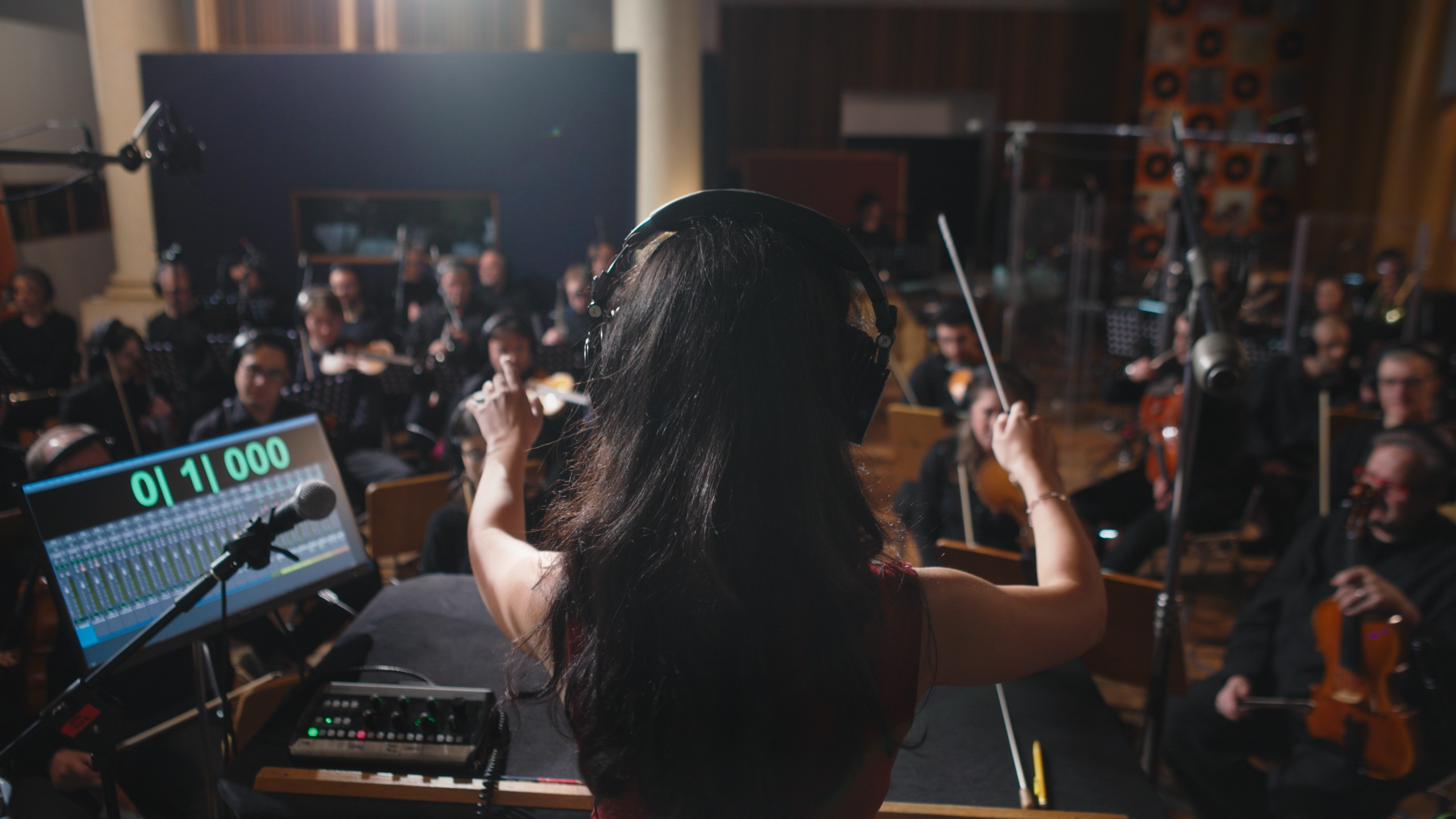
SoundTrek takes MFA students beyond the classroom and into professional recording environments, where they develop, record, and hear their original work performed by live musicians. Over the course of the 15-month program, students take part in three extended live recording experiences — one in the U.S., one remote session with musicians in Europe, and a capstone SoundTrek live in Europe. It’s hands-on experience that builds more than your skills — it builds the work, relationships, and portfolio you’ll take into your career.

Student Spotlight
Carl Zuck
Carson Zuck is an Atlanta-based, BMI-affiliated film composer with an undergraduate degree from the Boston Conservatory at Berklee & Berklee College of Music. His scoring philosophy centers on letting each score grow organically from a story's own emotional logic across drama, horror, documentary, and animation.
Full ProfileWhat You Learn Here is Everything You Need Out There
At MDS, you’ll get practical training on industry-style projects that can help develop your unique scoring voice. It’s mastery by design.
Explore courses in the MFA in Screen Scoring & Music Design program:
What we call film music is a language of signs. It speaks to us through a multitude of musical gestures that, over time, have come to have meaning for the audience. As with any system of signs, the sender must be competent in their use to convey messages that are clear and cogent. This course is an introduction to the vocabulary of music for the screen. In it, you will learn the language of screen scoring through a series of visual music exercises and assignments in writing for short scenes of different media types and genres.
In order to solve the dramatic and story problems posed by all forms of on-screen media, composers need to understand how artists who have preceded them have grappled with the same problems, such as how to evoke sympathy, apprehension, terror, nostalgia, and the full compass of human emotional experience. During this course, you will study scores and analyze both iconic concert works and landmark film music to give you the foundation to develop your own style.
Basic skills in instrumentation and arrangement are the first steps toward accomplishment in the craft of orchestration, which is the ability to make musical instruments “speak together” in a powerful and coherent way. During this course, you will go beyond basic grounding in orchestral instrumentation and learn about instrumentation for screen media, which incorporates a wide range of non-symphonic, folk, ethnic, electronic and even invented instruments and techniques for how they can be blended effectively to produce the contemporary hybrid score.
The platform for music composition and production in visual media is the Digital Audio Workstation (DAW). In this course, which will employ Apple’s Logic Pro X as its model DAW, you will learn about the most widely used tools and explore topics such as MIDI sequencing/programming, MIDI editing, use of MIDI CC’s (continuous controllers) and articulation sets, building of templates, basic digital signal processing, and the precise synchronization of music with picture. In addition, you will become familiar
As any experienced film composer will attest, the principal job of the composer is to support the story and the filmmaker’s intent in telling it. In musicological terms, the craft of doing this is called musical narratology, literally, “telling stories with music.” Narrative cinema is constructed based on classic story form, which includes exposition, conflict, resolution, three-act structure, and manipulations of time and space. You will score three assignments to picture, and through this exercise, learn to create a linear partnership between the story’s structure and the score that accompanies it.
Maurice Ravel, acknowledged as one of the greatest orchestrators in musical history, distinguished instrumentation from orchestration by saying that the orchestrator painted the colors around the individual instrument in such a way that these colors became more important than the identity of the instrument itself. The analogy to painting is fitting: works like Daphnis et Chloé and Mother Goose Suite are highly visual and textured in a way that can almost be felt. This course will put Ravel’s musical paintbrush in your hands. In addition to orchestration techniques, you will also learn the fundamentals of score preparation, notation, and engraving to prepare you for the live recording sessions that will occur at key stages of the program.
The “mock-up,” a digital simulation of an acoustical/orchestral performance, was once just a demo used to show the client/filmmaker one’s intent and obtain approval of the music prior to live recording. With the extraordinary advancement in the quality of digital instrument libraries, what was once a demo now frequently becomes the final product and the critical medium by which the composer communicates intent to the filmmaker. In this course you will develop the skills to create these digital products to meet the high standards of production and authenticity currently expected in the industry.
“Find your voice” is the imperative given to every student who enrolls in the Master of Fine Arts program. It is not always a straightforward process, as you must hone, winnow and polish to clear away what is merely imitative and arrive at something truly original. This is what the industry demands. In intensive individual sessions, your work will be critiqued and shaped in order to bring out the gold of your own personal identity.
Material assigned in MFA511 will be recorded in a series of sessions held in Nashville.
In this course, you will work with indie game developers at the Media Design School and other selected locations to create music for these adaptive, interactive experiences. You will be involved, as most top game composers are, from concept to completion of short, model game projects for which you will write the music, record it in session, and then, as a music designer, implement it in middleware, and work with the team to integrate it with the game engine to produce a final integrated product. Just as in the earlier Screen Scoring modules, where the musical and dramatic challenges posed by individual short scenes or sequences served as exercises in development of your craft, you will work in short-form so that your finished work can furnish pieces for your portfolio.
In this third and final in the technology sequence, the focus will be entirely on the emerging craft of music design, the integration and implementation of the linear musical elements provided by the game composer into the game engine via what is known as middleware. In-depth exploration of platforms such as Wwise and FMOD, as well as the vast creative possibilities for creating immersive experience in non-linear media.
The radical changes in compositional technique introduced by Modernism, Minimalism, Post-Minimalism, and other new forms, as well as simultaneous breakthroughs in electronic music and the integration of non-Western tonal systems into popular music, have had a profound effect on the way music for visual media sounds and the expectations content creators have for it. In this course you will continue the work of Cinematic Score Study I to explore the paths that brought music to where it is now, and consider where it is going in the future.
“Find your voice” is the imperative given to every student who enrolls in the Master of Fine Arts program. It is not always a straightforward process, as you must hone, winnow and polish to clear away what is merely imitative and arrive at something truly original. This is what the industry demands. In intensive individual sessions, your work will be critiqued and shaped in order to bring out the gold of your own personal identity.
Material assigned in MFA521 Screen Scoring III to be recorded in remote/virtual recording sessions conducted in Europe but monitored by students and staff in Atlanta.
This advanced composition class will pair you with a group of young independent or advanced student filmmakers to collaborate on the scoring of a selected series of short films that are either festival-bound or have been featured on the festival circuit. From spotting to scoring and mixing, the course will model professional practice at every stage. The resulting scores will be professionally recorded in the capstone quarter on a selected European scoring stage with students in attendance. All sessions will be filmed and scores professionally mixed. Recording is expected to take place over an extended period in the designated country.
Tools for AI-assisted music creation are currently in a formative state, but considering their rapid rate of advancement it is not unreasonable to expect that in the near future many lower budget projects and library catalogs will be at least partially scored with AI utilities. These are the same projects that today support the early careers of many composers. It is therefore essential that you become familiar with these tools, and that music creators find ways to become their masters rather than their servants. This course is a survey of existing AI technology and includes an analysis of current and future trends for AI-assisted music creation. You will also practice composition utilizing leading AI music platforms.
Music editing, the assembly, recombination, processing and pre-mixing of all music elements in postproduction, is both a gateway profession for those wishing to compose and an alternative career path for those who opt for a more stable occupation that is nonetheless at the heart of the craft. The music editor is the composer’s most valuable ally and is present throughout the entire scoring and re-recording (dubbing) process. Music supervision encompasses the entire range of content needed to satisfy a project’s music needs, from clearing and licensing pre-existing songs for use in the project to serving as an executive music producer and recommending and securing a composer for the score. Music supervisors often come onboard with editors and have taken on many of the functions once performed by studio executives.
“Find your voice” is the imperative given to every student who enrolls in the Master of Fine Arts program. It is not always a straightforward process, as you must hone, winnow and polish to clear away what is merely imitative and arrive at something truly original. This is what the industry demands. In intensive individual sessions, your work will be critiqued and shaped in order to bring out the gold of your own personal identity.
The composer of music for visual media is a self-employed independent contractor as well as generally the sole proprietor of a small business. Whether the composer is the only employee or oversees a staff of forty, they must be thoroughly familiar with all aspects of the business. In this course, you will become familiar with the language of both “work-for-hire” and “all-in package” contracts, the metrics of performance royalties, their administration by Performing Rights Organizations (PRO’s), copyright law, and the rules and regulations governing intellectual properties in the age of AI. In addition, you will learn what it means to be your own publicist, and in the early stage of a career, an agent.
The media composer who is also able to conduct his or her music will not only have an extra measure of creative control over the outcome of their recordings, but may become eligible for additional earnings as a hired studio conductor. In preparation for the capstone recording sessions in the EU in MFA536, all students will undertake this workshop and thereby gain the competence and confidence to conduct your summative piece.
During this course, you will undertake to score complete live-action narrative, animated, or documentary short films to demonstrate mastery of the craft and prepare you for your thesis capstone project. You will write for varying large orchestral ensembles blended with electronic elements, and your work will be recorded in live session on a designated European scoring stage with full professional crew, complemented by cultural learning experiences. Note: Recording is anticipated to occur over a period of 1-2 weeks in the designated country. This SoundTrek occurs in the final quarter of the program, travel to a designated European studio location is required. Full participation in this exercise is required. All travel expenses (e.g., airfare/transportation, lodging, incidentals, and meals) are the responsibility of the student. Strayer will cover the studio reservation and recording fees. Students are responsible for securing their own visa, if needed.
In the capstone course, you will undertake and complete a signature project that demonstrates your competency in the field of music for visual/screen media. This will be a major work of music written and produced for an audio-visual project such as a narrative or documentary short film of festival quality, a video game, an interactive or virtual reality project, or another approved audio-visual collaboration. You will also submit a written commentary, a finished composer “reel” suitable for professional use, and a composer website to showcase your accomplishments.
Cost and Financial Information
At Media Design School at Strayer our team of advisors provides academic, admissions and guidance on cost as you navigate through the MFA program. Tap into resources online or on campus.
22
courses
82 total credits
$150
one-time
final academic requirements evaluation fee
$100
resource kit
per course
$65
technology fee
each term
$47,970
full-tuition cost
Speak with an advisor about financing options
Two courses, MFA 516 and MFA 536, require travel to designated studio locations.
In MFA 516, travel will be within the U.S.; full in-person participation in this experience is required. Strayer will cover transportation to and from the recording studio’s city, and the studio reservation and recording fees. All other travel expenses (e.g., transportation within the recording studio’s city, lodging, incidentals, and meals) are the responsibility of the student.
In MFA 536, the capstone SoundTrek occurring in the final quarter of the program, travel to a designated European studio location is required. Full participation in this experience is required. All travel expenses (e.g., airfare/transportation, lodging, incidentals, and meals) are the responsibility of the student. Strayer will cover the studio reservation and recording fees. Students are responsible for securing their own passport and visa, if needed.
Strayer expects that this program’s tuition will exceed federal unsubsidized loan limits as established by the U.S. Department of Education for federal financial aid. Students should have a plan to pay for tuition that is not covered by federal loans, as well as living and required program expenses.
Students will be required to purchase and bring their own MacBook Pro or MacBook Air.
Frequently Asked Questions
The Media Design School at Strayer (“MDS at Strayer”) is located at 715 Peachtree Street NE
in Atlanta’s Midtown, occupying the first two floors of the building. The campus features a
state-of-the-art facility and composer lab, and houses all MDS at Strayer classes. Classes
for the MFA program begin October 5, 2026..
Although Strayer University and MDS at Strayer do not provide or manage student housing in Atlanta, we can provide you with sources of information such as PROMOVE
https://www.promove.com that assist students in finding affordable housing; the
information will be provided to all accepted students via Strayer’s iCampus site. The new
campus is located in Atlanta’s Midtown commercial district, but there are residential areas
with plenty of green spaces within a short distance. We urge you to begin your research early.
Off-campus housing information is provided for informational purposes only and does not
constitute endorsement or approval by the University or by MDS at Strayer. The University
and MDS at Strayer do not inspect, verify, or control any housing options and make no
representations regarding safety, quality, pricing, or availability. Students are responsible
for independently evaluating and securing all housing arrangements.
Yes. There is a MARTA stop at Peachtree Center Station, 216 Peachtree Street NE, and also
at the North Avenue Station, which is only a seven-minute walk from campus.
Regular classes are scheduled Monday through Thursday, generally between 10 a.m. and 5
p.m, with some exceptions for visiting artists and lecturers. Writing assignments will
increase in complexity as the session progresses, so we offer a three-day weekend for
composing.
We will use reasonable efforts to provide after-hours access to the MFA lab, as we know this
is where many students will do their writing. These hours will be necessarily limited by the
building’s security requirements, and by scheduling of Strayer evening classes, but we will
attempt to make them as generous as we can. It is recommended that you also keep a MIDI
keyboard and basic writing setup in your living space.
Yes, there is a cafe in the building lobby just outside our facility. Students will have access
to a kitchenette area which includes two microwaves, two under-counter refrigerators, two
Keurig coffee makers, and one counter top water filter/dispenser as well as lounge space for
eating, reading or relaxing between classes. There is also a rock-climbing gym on the lower
level of the building. There are many restaurants and cafes in the lively Midtown area.
Special pricing is available through Apple’s Education Store. Once you have received your
letter of acceptance, you can contact the Apple Education Store at
https://www.apple.com/us-edu/store.
MDS at Strayer will provide all required software and subscriptions for utilities such as
EastWest ComposerCloud+, Musio+ Complete, Native Instruments Komplete 26 (including
Kontakt 8), Dorico 6 notation software, and Pro Tools Studio, as well as required texts in
eBook format. The cost of these will be covered by your resource kit fees.
The Resource Kit is $100 at the course level and covers a broad range of technology
resources. Students are generally only able to opt out of textbook requirements.
The MFA in Screen Scoring & Music Design includes two required travel experiences as part
of the curriculum: a domestic recording trip to Nashville (SoundTrek I in MFA 516) and an
international capstone experience (SoundTrek III in MFA 536). The total estimated program
travel costs, for which students are responsible, are currently estimated to be $4,000 per
student, which covers lodging in Nashville, and airfare and lodging for the international trip.
This figure is used for federal financial aid cost-of-attendance calculations and is subject to
change without notice.
All other costs (except as noted below as being included in the program tuition), including,
but not limited to, meals, incidentals, transportation within the recording studio cities,
travel-related expenses and other non-University fees, costs and expenses associated with
travel, for both trips are also the responsibility of each student and are not included in the
$4,000 estimate.
Nashville Recording Trip (SoundTrek I – in MFA 516)
Transportation to and from Nashville is included in the program tuition and will be arranged
on behalf of all students. MDS at Strayer will provide students with available
accommodation options near the venue in advance of the trip so students can plan and book
their accommodation accordingly. MDS at Strayer is working with a third-party travel partner to coordinate group logistics and will use reasonable efforts to seek discounted, group, or preferred rates, when available, through coordinated travel arrangements; however, the University does not guarantee the availability of such rates or any resulting savings.
International Capstone (SoundTrek III in MFA 536)
The SoundTrek III capstone experience includes 3–4 nights abroad and is an integral part of
the program curriculum. MDS at Strayer is working with a third-party travel partner to
coordinate group logistics and will use reasonable efforts to seek discounted, group, or
preferred rates on airfare and accommodations, when available, through coordinated travel
arrangements; however, the University does not guarantee the availability of such rates or
any resulting savings.
Recording Sessions
Recording sessions — including professional musicians, crew, mixer, Pro Tools session with
surround mixes and stems, video footage, and printed scores and parts — are included as
part of your program tuition. No additional fees are required for these sessions.
All travel figures and logistics are estimates and subject to confirmation and change without
notice. Further details on travel logistics will be shared with enrolled students well in
advance of each trip for students to make their final arrangements.
You own the original musical compositions you create as part of the program, including the
copyright in the underlying musical work, subject to any pre-existing or third-party materials
used in it. Any master recording of your original music composition (including audio, video,
mix, master, stems, or session files) created using University facilities, equipment, personnel, or funding, will be owned by Strayer University. Your ownership of the original musical composition itself is not affected. Strayer grants you a license to use these master recordings for your personal and professional use, provided the use does not imply University endorsement. In addition, you may grant or assign a non-exclusive commercial sublicense for synchronization with a third-party audiovisual work, advertisement, trailer, video game, or commercial release.
Where This Can Take You
Build the skills—and the portfolio—to pursue careers across the world of music for screen.
